
When people talk about the most expensive supercar ever made, one name inevitably comes up: Bugatti La Voiture Noire. At an estimated price of nearly $19 million, it exists in a different financial universe compared to most hypercars. Even brands like Koenigsegg, Pagani, or Ferrari feel almost “reasonable” when placed next to it.
As someone who has spent years reading about cars, watching engineering breakdowns, and following the evolution of modern hypercars, I used to assume that price was mostly about horsepower and speed. But La Voiture Noire taught me something different.
Its extreme price is not driven by a single factor. It is the result of design philosophy, brand history, engineering decisions, and intentional rarity, all layered together in a way very few cars ever achieve.

It Is Not Just Rare — It Is Singular
Many manufacturers proudly advertise limited production runs: 100 units, 50 units, sometimes even 10. Bugatti went further.
La Voiture Noire is a true one-off.
There is exactly one example in existence, built for a single customer. That alone separates it from nearly every other hypercar on the planet. Even extremely rare cars like the Pagani Zonda HP Barchetta or Ferrari Monza SP2 still exist as part of a small series.
This kind of singularity changes the conversation entirely. Once a car is truly unique, price becomes less about market competition and more about art and commission. At that point, you are no longer buying a product—you are funding a creation.

The Weight of Bugatti’s Heritage
Bugatti is not just another performance brand. It carries a historical weight that very few manufacturers can match.
La Voiture Noire was created as a modern tribute to the original Bugatti Type 57 SC Atlantic, one of the most legendary and mysterious cars in automotive history. Only a handful were ever made, and one disappeared during World War II.
For Bugatti enthusiasts, that story matters deeply.
When I first learned about this connection, the price started to make more sense. La Voiture Noire is not just a new hypercar—it is Bugatti reclaiming and reinterpreting its own lost legend. That emotional and historical value is impossible to quantify with horsepower figures alone.
Hand-Built Is an Understatement
Most hypercars are described as “hand-built,” but in reality, many still rely on shared components or modular production methods.
La Voiture Noire is different.
The bodywork alone is a masterclass in craftsmanship. Every panel was shaped specifically for this car, with no intention of reuse. The exterior is made entirely from carbon fiber, finished in a deep black that absorbs light rather than reflects it. From certain angles, the car almost disappears into its surroundings.
Nothing about it feels mass-produced—because it isn’t.
This level of bespoke construction dramatically increases cost. When every part is designed, tested, and refined for a single vehicle, there is no economy of scale to soften the expense.

The W16 Engine: Complexity Over Efficiency
Bugatti’s W16 quad-turbo engine is already an anomaly in the automotive world. It is large, heavy, incredibly complex, and extremely expensive to build.
Most modern hypercar manufacturers have moved toward smaller turbocharged engines or hybrid systems for efficiency and regulatory reasons. Bugatti chose a different path—one focused on mechanical excess.
Maintaining and refining the W16 platform requires enormous engineering resources. For La Voiture Noire, the engine is not simply dropped into an existing chassis. It is integrated into a vehicle designed specifically to showcase Bugatti’s technical dominance.
This engine is not just about speed. It represents a refusal to compromise, even when compromise would be cheaper.

Design as Sculpture, Not Aerodynamics Alone
One thing that struck me while studying La Voiture Noire is how little Bugatti talks about lap times.
Most hypercars are marketed with performance statistics: Nürburgring records, acceleration figures, downforce numbers. La Voiture Noire exists outside that conversation.
Its design feels closer to sculpture than race engineering. The flowing roofline, the uninterrupted body surfaces, and the signature dorsal spine running down the center all suggest that visual impact was as important as performance.
This is not a car designed to dominate a track day leaderboard. It is designed to be seen once and remembered forever.
That artistic intent significantly influences cost.
Why Other Hypercars Are “Cheaper” by Comparison
When you look at brands like Koenigsegg or Pagani, their cars are engineering marvels. Some are faster, lighter, or more technologically advanced than La Voiture Noire.
But they operate under a different philosophy.
- Koenigsegg focuses on innovation and pushing mechanical limits.
- Pagani emphasizes artistry but still produces small series.
- Ferrari balances heritage with broader brand strategy.
Bugatti, with La Voiture Noire, stepped outside even those frameworks. The car does not exist to compete. It exists to define the upper boundary of what a modern automobile can represent.
That difference in intent is why comparison becomes difficult—and why the price gap exists.
The Customer Is Part of the Price
This is an uncomfortable truth in the car world, but it matters.
The buyer of La Voiture Noire was not simply purchasing a car. They were commissioning a statement. The price reflects not only the vehicle itself but the relationship between Bugatti and the owner.
At this level, the customer influences design, execution, and final expression. That kind of collaboration does not happen in standard production, no matter how limited.
When a car is built around a single vision, its value becomes deeply personal—and therefore exceptionally high.
My Take as an Enthusiast
As someone who will likely never sit behind the wheel of a $19 million hypercar, I do not see La Voiture Noire as aspirational in the traditional sense.
Instead, I see it as a reference point.
It shows how far a manufacturer can go when cost is not the primary constraint. It also highlights the difference between cars built to be driven hard and cars built to exist as cultural artifacts.
La Voiture Noire is expensive not because it is the fastest, but because it is the most uncompromising expression of what Bugatti believes a modern masterpiece should be.

Seeing It in Person: Experience Changes Perspective
Recently, I had the opportunity to attend a high-end automotive showcase at a luxury dealership not far from where I live. It was one of those curated events—invitation-only, quiet lighting, polished floors—where the cars are displayed more like gallery pieces than products.
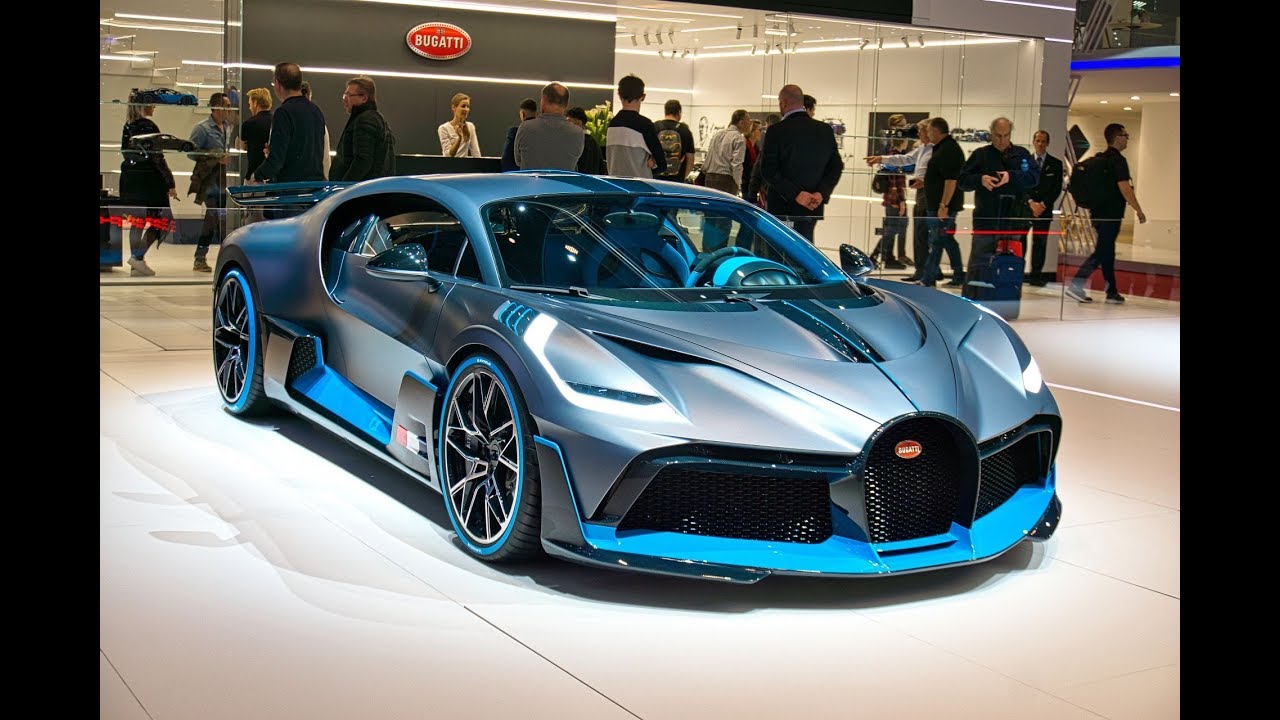
La Voiture Noire itself was not present, but several Bugatti models were, along with Ferraris, Lamborghinis, and a few limited-production hypercars. For the first time, I was allowed to sit inside a Bugatti, hold the steering wheel, and experience the cabin environment up close.
That moment changed how I understood the brand.
From the driver’s seat, everything felt deliberate. The materials were not flashy in the way Ferrari often is. There was no immediate attempt to impress through aggressive colors or dramatic design flourishes. Instead, the interior felt restrained, almost serious. It communicated confidence rather than excitement.
As someone who has spent years consuming automotive content through screens, this physical interaction mattered. It grounded my understanding in reality. You cannot fully appreciate a car like this through photos alone.
I remember gripping the steering wheel and realizing that this was not designed to make me feel like a race driver. It was designed to make me feel like the car itself was complete—finished, resolved, unquestionable.
That feeling lingered as I walked through the rest of the showroom.

Comparing the Stories: Bugatti vs Ferrari
Ferrari tells one of the most compelling stories in automotive history. Racing heritage, Formula 1 success, passionate design—it is a brand built on emotion. When you sit in a Ferrari, you are constantly reminded of speed, competition, and drama.
Bugatti’s story is different.
While Ferrari invites you into a legacy of racing, Bugatti positions you as a caretaker of history. The narrative is quieter, heavier, and more reflective. Instead of asking, “How fast do you want to go?” Bugatti seems to ask, “Do you understand what this represents?”
Standing between a Ferrari and a Bugatti at that event, I noticed how people behaved differently around them. Ferrari drew excitement—phones out, quick photos, animated conversations. Bugatti drew silence. People spoke more softly. They spent more time looking, less time reacting.
That difference matters when discussing La Voiture Noire.
Ferrari’s storytelling is undeniably more accessible. It resonates with a wider audience because it is rooted in competition and passion. Bugatti’s storytelling, however, feels narrower but deeper. It does not try to win everyone over.
And that exclusivity of narrative is part of why La Voiture Noire commands such an extreme price.
Does Bugatti’s Story Truly Outshine the Others?
This is where my perspective as a blogger and enthusiast becomes more nuanced.
Is Bugatti’s story objectively better than Ferrari’s? Not necessarily. Ferrari’s legacy is richer in racing, broader in cultural impact, and more emotionally immediate.
But Bugatti’s story is more focused.
La Voiture Noire is not just another chapter—it is a statement piece within a very specific historical arc. It references a lost car, a vanished era, and a philosophy that predates modern performance metrics.
From an EEAT standpoint, this distinction matters. It explains why the price exists, rather than simply asserting that it does.
Bugatti does not rely on hype cycles or motorsport headlines. Instead, it builds authority through continuity—linking past, present, and future into a single object. That approach resonates more strongly with collectors and historians than with casual fans.
Why This Matters to the Reader
As a writer, I believe credibility comes from proximity—not ownership, but exposure. Sitting in that showroom, touching those materials, and observing how people interacted with different brands gave me insight that no press release could offer.
It reinforced my belief that La Voiture Noire is expensive not because it outperforms everything else, but because it exists on a different narrative plane.
Ferrari tells you why driving matters. Bugatti tells you why preservation matters.
La Voiture Noire sits at the extreme end of that philosophy, where the car becomes less about motion and more about meaning.
Reflection
Walking out of the showroom that day, I realized something important: not every supercar is meant to inspire desire. Some are meant to inspire reverence.
La Voiture Noire belongs firmly in the second category.
And whether or not one finds that story more compelling than Ferrari’s ultimately depends on what they value more—emotion or permanence, excitement or legacy.
For Bugatti, the answer is clear. And that clarity, backed by experience, is what ultimately justifies the price.
Final Thoughts
Bugatti La Voiture Noire is not the most expensive supercar by accident. Its price is the result of intentional decisions at every level—design, production, heritage, and philosophy.
Compared to other supercar brands, it stands apart not as a competitor, but as an outlier. A singular object created at the intersection of engineering, history, and art.
And that, more than horsepower or top speed, is what truly makes it the most expensive supercar in the world.







Leave a Reply